
This course is a Template, please add your description and change the course photo.
- Teacher: Abdelhak Traiki
Category: Semester 1
This course is a Template, please add your description and change the course photo.
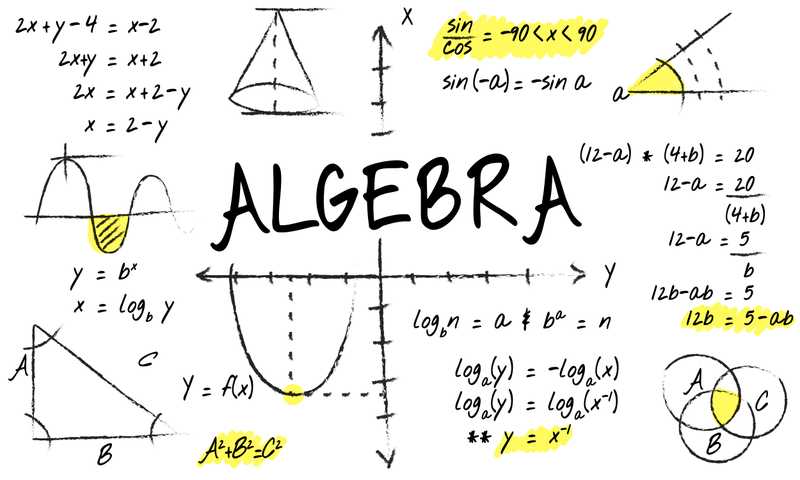
Algebra 1 covers foundational topics in algebra with three key chapters:
Chapter 1: Polynomials and Rational Fractions: Focuses on polynomial operations, factorization, roots, and the manipulation of rational fractions.
Chapter 2: Vector Spaces: Introduces vector spaces, subspaces, linear combinations, bases, and dimensions.
Chapter 3: Linear Applications: Explores linear transformations, their properties, kernels and images.
This module equips students with essential tools for understanding higher-level algebraic structures and applications.
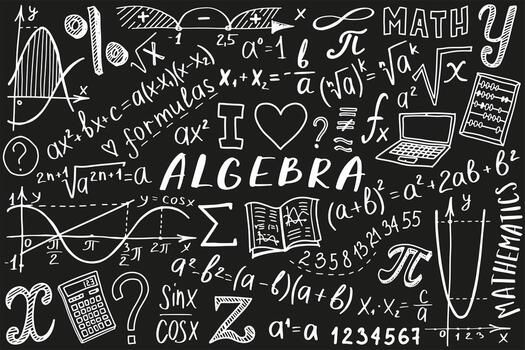
Algebra 2 covers fundamental concepts in linear algebra, focusing on matrices and their applications.
This course is a Template, please add your description and change the course photo.
This course is a Template, please add your description and change the course photo.
Ce cours est une initiation à la programmation, les structures de données en algorithmique.L'étudient apprend à résoudre des problèmes en évrivant des solutions algorithmiques et des codes en langage python.
This course is a Template, please add your description and change the course photo.
Ce cours vise à approfondir les concepts fondamentaux de l’algorithmique et de la programmation. Il met l’accent sur l’analyse des algorithmes, l’utilisation avancée des structures de données et la résolution de problèmes plus complexes à l’aide du langage Python.
This course provides a practical and conceptual introduction to the fundamental principles of Algorithms and Data Structures, essential for solving computational problems efficiently. Through a combination of theory and hands-on programming in C, students will learn how to design, implement, and analyze algorithms and data structures that form the backbone of computer science.
Key topics include iteration, recursion, divide-and-conquer techniques, pointers, arrays, linked lists, stacks, queues, trees, and algorithmic complexity analysis.
By the end of this course, students will be able to:
Explain fundamental algorithmic concepts such as iteration, recursion, sorting, searching, and divide-and-conquer.
Describe and apply principles of memory management (static and dynamic) in C.
Analyze algorithm time complexity using Big O notation.
Implement and manipulate fundamental data structures (arrays, linked lists, stacks, queues, trees).
Apply iterative and recursive problem-solving techniques to design efficient solutions.
Select appropriate data structures and algorithms for specific computational tasks.
Demonstrate structured thinking, debugging, and code optimization skills.
Evaluate trade-offs between time, space, and implementation paradigms when solving algorithmic problems.
This course is a Template, please add your description and change the course photo.